Valentine’s Day Procrastination: Day of Delivery Trends
Instacart and DoorDash reveal the top purchases made on February 14, 2025.
Feb 10, 2026 | 3 min read
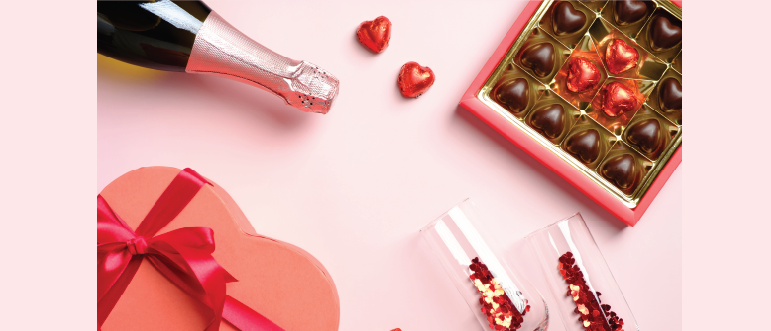
Valentine’s Day ranked as the second biggest gifting day of the year, trailing only Mother’s Day, “driven largely by perfectly timed, last-minute gestures like same-day flower and chocolate deliveries,” according to Instacart.
Instacart reported that on February 14, 2025, chocolate candy orders increased by about 111%, while orders for roses increased by 1,933%. Other gifts that saw significant spikes in orders on Valentine’s Day included flower bouquets (+1,459%), chocolate-covered fruit (4,693%) and stuffed animals and plush toys (1,867%).
Meanwhile, DoorDash reported that over 80% of all its Valentine’s Day flower orders were placed on the day itself—with orders peaking from 9-10 a.m.
Additionally, according to DoorDash’s Valentine’s Day trends, orders from grocery, liquor, retail and convenience store partners revealed that “beyond the expected demand for chocolate (+260%), carts were filled with aphrodisiacs and bubbles … including rosé champagne (+190%), prosecco (+120%) and oysters (+50%).”
DoorDash also noted that “Galentine’s Day,” on February 13, has cemented itself as a staple holiday amongst consumers. DoorDash recorded massive demand for “girlie goodies and treats,” including gift cards (+450%), bath bombs (+100%) and cupcakes (+130%) on the day.
Over half of consumers (55%) plan to celebrate Valentine’s Day this year, the National Retail Federation (NRF) reported. Most of those celebrating (83%) plan to purchase gifts for a significant other, with an additional 58% planning to buy gifts for other family members.
According to the National Confectioners Association, 84% of Americans will enhance their Valentine’s Day celebrations with chocolate and candy. Additionally, 92% of people hope to receive chocolate on Valentine’s Day, and nearly half of Americans plan to treat themselves to a box of chocolates.
“Candy remains the most popular Valentine’s Day gift, with 56% of consumers planning to purchase candy. Other top gifts include flowers (41%), greeting cards (41%), an evening out (39%) and jewelry (25%). However, shoppers are expected to spend the most—a total of $7 billion—on jewelry, followed by $6.3 billion on an evening out, $3.5 billion on clothing and $3.1 billion on flowers,” NRF reported.
On average, consumers are expected to spend $199.78 on Valentine’s Day items such as candy, flowers, jewelry, greeting cards and meals and entertainment this year for a total of $29.1 billion. According to the Merchants Payments Coalition, that cost consumers more than $683 million in higher prices from credit card swipe fees this Valentine’s Day—as much as a typical Valentine’s greeting card or three pieces of chocolate from a mid-range gift box.
