Department of Labor Proposes Changes to Determining Contractor Status
The 2024 analysis determined employee or independent contractor status under the Fair Labor Standards Act.
Feb 27, 2026 | 4 min read
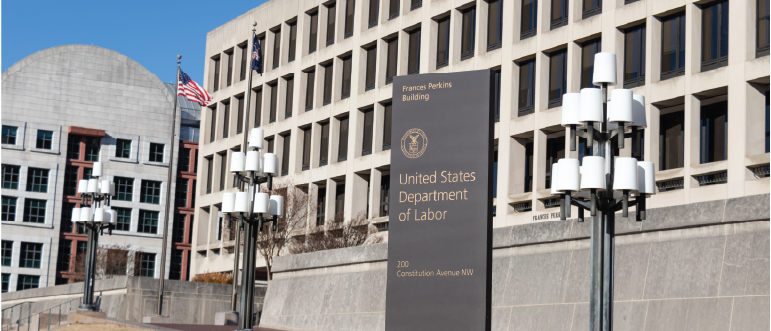
The Department of Labor (DOL) Wage and Hour Division is proposing to rescind the current analysis for determining employee or independent contractor status under the Fair Labor Standards Act (FLSA) currently set forth in 29 CFR part 795. The Department is proposing to replace it with the analysis that it published and adopted in a prior final rule dated January 7, 2021, with a few modifications.
This announcement comes after the Department in May 2025 suspended enforcement of the current analysis due to ongoing legal challenges.
“Consistent with Supreme Court and federal circuit court precedent, the proposed rule would make it easier to properly differentiate between employees with the protections under the Fair Labor Standards Act and those workers who work as independent contractors,” the Department said.
According to the Department, the analysis in the proposed rule would:
- Apply an “economic reality” test to determine whether a worker is in business for himself or herself as an independent contractor or is an employee economically dependent on an employer for work.
- Identify and explain two “core factors” to help determine if a worker is economically dependent on an employer for work or in business for him- or herself:
- The nature and degree of control over the work.
- The worker’s opportunity for profit or loss based on initiative and/or investment.
- Identify other factors to help determine a worker’s status as an employee or independent contractor, including the amount of skill required for the work, degree of permanence of the working relationship, and whether the work is part of an integrated unit of production.
- Advise that the actual practice of the worker and the potential employer is more relevant than what may be contractually or theoretically possible.
- Provide eight fact-specific examples applying the factors to real-life circumstances.
“NACS welcomes the Department of Labor’s action to return to the economic reality test that truly determines if someone is an employee or an independent contractor. This standard provides essential clarity to businesses to ensure they are complying with the law,” said Jon Taets, director of government relations at NACS.
In addition, the Department is proposing to apply the analysis to the Family and Medical Leave Act (FMLA) and Migrant and Seasonal Agricultural Worker Protection Act (MSPA), both of which incorporate the FLSA's scope of employment.
Comments concerning the proposal must be sent to the Department before April 28, 2026.
In early 2024, the U.S. Department of Labor released its final ruling determining employee or independent contractor classification under the Fair Labor Standards Act. The final rule largely mirrored the DOL’s proposed rule and required companies to weigh a variety of economic factors to determine whether a worker is an employee or an independent contractor.
The agency said at the time the rule uses six factors to guide a worker’s relationship with an employer:
- Any opportunity for profit or loss a worker might have.
- The financial stake and nature of any resources a worker has invested in the work.
- The degree of permanence of the work relationship.
- How much control an employer has over the person’s work.
- Whether the work the person does is essential to the employer’s business.
- The worker’s skill and initiative.
In December 2022, NACS filed comments with DOL on its proposal to replace the existing regulations surrounding the classification of certain workers as independent contractors.
In the comments, NACS General Counsel Doug Kantor wrote: “NACS is concerned that the proposed rule changes legal standards for the determination of whether or not a worker is a contractor or an employee in ways that will disadvantage small businesses, create legal uncertainty, harm beneficial contracting relationships and undermine compliance with other laws.”
