TEI Partners With Paren for New EV Charging Program
The program will provide a ‘more complete view of EV charging performance across the market.’
Jan 13, 2026 | 2 min read
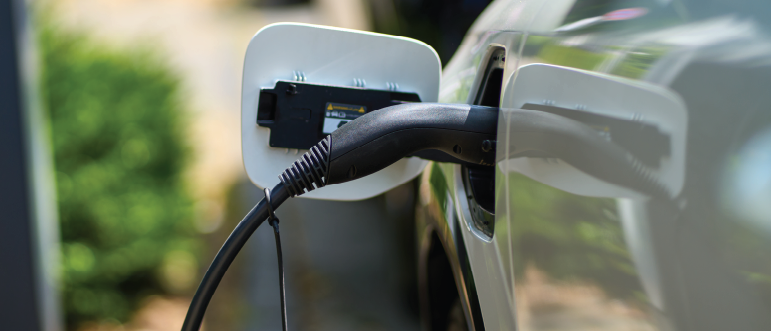
The Transportation Energy Institute’s (TEI) Charging Analytics Program announced a new partnership today with Paren, an EV charging data platform. The program will provide advanced analysis and insights powered by Paren’s EV charging data, giving decision makers a “more complete view of charging performance across the market,” TEI said.
The collaboration is designed to equip TEI’s network, including charging point operators, energy and convenience retailers and OEMs, with data-driven intelligence to support infrastructure planning, investment strategy and operational improvement. Paren’s datasets include fast charging utilization, session behavior, reliability, amenities, pricing and safety, offering a level of detail and consistency across a range of datasets.
Under the partnership, TEI will continue to offer its network quarterly insights with its Charging Analytics Program as well as tailored solutions. Now, these stakeholders will also have access to Paren-powered EV data, including market intelligence, performance benchmarking and custom analytical support.
“TEI exists to provide the market with insight it can trust,” said John Eichberger, executive director at TEI. “After careful review, we chose Paren as our exclusive data provider as they have set the standard for EV charging data quality and coverage. Their analytics consistently outperform other sources in depth, accuracy and relevance.”
“As the EV charging sector matures, stakeholders are increasingly demanding transparency, comparability and evidence-based decision making. The Paren and TEI partnership reflects that shift and signals a growing emphasis on data that supports smarter deployment, stronger operations and long-term market confidence,” TEI said.
In other recent TEI news, last month TEI released its latest report, Driving Insight: A Five-Year Synthesis of Combustion Emissions Research, which looked at research from 2020–2024 and found actionable insights for reducing emissions from internal combustion engine vehicles.
The report synthesizes findings from nine major studies, offering a framework for policymakers, industry leaders and stakeholders seeking affordable, scalable and effective emissions reduction strategies.
