NACS Community Remembers Carl Bolch, Jr.
RaceTrac’s Bolch, Jr. was an industry icon, influential leader and the 2000-2001 NACS Chairman.
Dec 29, 2025 | 4 min read
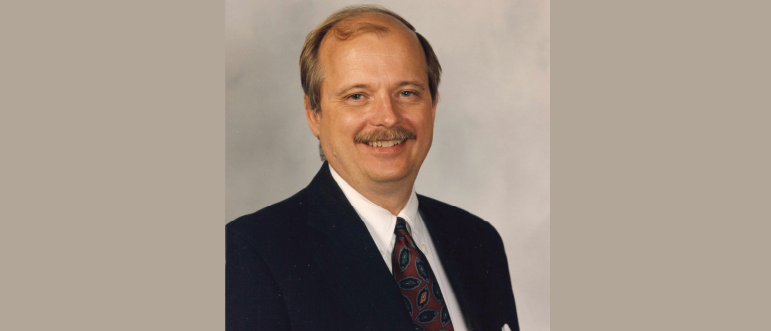
It is with much sadness that NACS Daily reports the passing of RaceTrac’s long-time leader and Chairman Emeritus, Carl Bolch, Jr., who died on December 26 at the age of 82.
Carl Bolch, Jr. revolutionized the convenience store industry by introducing self-service gas stations in the South as well as pay at-the-pump technology. In 1967, Bolch began his storied career with RaceTrac, a family business founded by his father who opened his first independent gasoline station in St. Louis, Missouri in 1934. The operation grew to 12 locations and did business under the name “Carl Bolch Trackside Stations” until 1965 when it was sold. In 1959, Bolch, Sr. purchased Oil Well of Opp, Alabama, which operated a chain of independent gasoline stores in mostly rural Alabama. Carl Bolch, Jr. joined his father in 1967 and, in consultation with his father, formulated the original Raceway concept. This concept consisted of high-volume, full-service gasoline stations typified by a long center island where an attendant could maximize the number of vehicles fueled and serviced.
The first Raceway station was constructed in Jasper, Florida and opened in 1968. In 1976, Bolch moved the company’s headquarters to Atlanta and in 1979 the RaceTrac brand was born when he rebranded his existing self-service stations.
From the beginning of his convenience store journey, Bolch was always humble, staying connected to the in-store experience by continuing to work in and visit RaceTrac stores even as he moved into management roles and during his five-decade tenure as CEO. He remained on the Board of Directors as executive chairman until February 2024. His daughter Natalie Morhous was named CEO in 2024. Morhous also is a member of the NACS Executive Committee.
Ultimately, under Bolch's 56 years of leadership, RaceTrac grew from 100 stores in two states to more than 800 stores in 14 states, now employing more than 10,000 team members. Bolch’s vision enabled RaceTrac to become Georgia’s third largest privately held company and 22nd largest in the United States. RaceTrac’s retail brands now include more than 800 RaceTrac and RaceWay retail locations, approximately 1,200 Gulf branded locations and more than 445 Potbelly neighborhood sandwich shops throughout the United States.
Bolch was extremely active in the industry and NACS, culminating with his term as NACS 2000-2001 Chairman. He also served as president of the Society of Independent Gasoline Marketers of America (SIGMA) and was the first person ever to hold both positions. In July 2023, he was awarded a Special Congressional Honor from U.S. Representative Barry Loudermilk of Georgia.
“Carl was passionate about government relations and the role that NACS could play in communicating the industry’s voice on critical issues. His leadership helped propel NACS to new levels of engagement on Capitol Hill and showed how we are best when we work together. He was a leader in every sense of the word, and he will be missed,” said NACS President and CEO Henry Armour, who succeeded Bolch as NACS chairman in October 2001.
During Bolch’s term as NACS chairman, the association grew the work of the NACS Technology Standards Project, which eventually became Conexxus. In addition, it expanded its communications around the retail fueling industry, developing its first national communications campaign explaining the dynamics related to the industry. NACS also navigated the post-September 11 environment that included significant disruptions related to fueling and travel. The NACS Show in October 2001 was the first major tradeshow to take place in Las Vegas following September 11.
Bolch earned a Doctor of Law degree from Duke University Law School and a B.S. in economics from the Wharton School of Business at the University of Pennsylvania. Carl and his wife Susan provided Duke University with multi-million-dollar gifts to establish and expand the Bolch Judicial Institute at Duke Law School, a center of learning for judges, lawyers and students that aims to advance principles such as judicial independence and the rule of law. The Bolch Institute is home to the prestigious Bolch Prize for the Rule of Law and the Lemkin Medal, both of which are awarded annually, and provides the only Masters in Judicial Studies program in the world for sitting judges.
Carl is survived by his wife of 44 years, Susan, five children, Carl III, Allison, Natalie, Melanie and Jordan and seven grandchildren, Marjorie, Margaret, Rawson, Wilson, Lily Ray, Edward and Hailey (and a granddaughter on the way).
A private service will be held in the coming weeks. In lieu of flowers, the Bolch family requests donations be made in his name to The Michael J. Fox Foundation for Parkinson’s Research.
