When Did Ube Get So Hot?
The New York Times explores how ube’s vivid purple color made it so popular in the United States.
Apr 10, 2026 | 3 min read
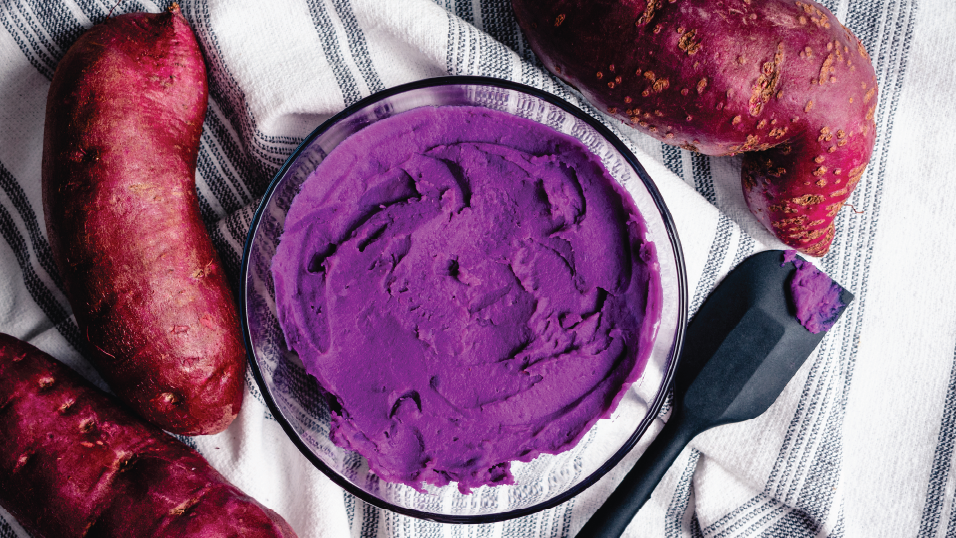
Ube, the vivid purple yam (pronounced “oo-bay”), has been steadily increasing in popularity and showing up in American foods, but the Filipino favorite didn’t become a hot American sensation overnight—it has been creeping into the American diet for years, reported The New York Times.
“Trader Joe’s stocked ube ice cream for a few months. Birch Benders sells an ube mochi pancake and waffle mix in stores. And this spring, Starbucks released a limited-time iced ube coconut macchiato. Big food companies, restaurant chains and even the local coffee shop are battling one another for every dollar. … As a result, a sort of flavor arms race has emerged, with teams of consultants and advisers scouring the globe—or, more aptly, social media posts—for unusual ingredients or combinations,” NYT wrote.
These new flavors are often available only for a limited time, leading millennials and Gen-Z to rush to “become one of the first to review the new summer drink or fall snack and post their thoughts on social media.”
NYT highlighted, however, that the ascent of ube as a hot, new flavor has little to do with taste or its subtle blend of mild sweetness, nuttiness and notes of vanilla, but instead it’s all about the purple color.
“One of our criteria for new flavors is that the color has to be social media gorgeous, something that influencers gravitate to,” said Mark Webster, a 40-year veteran of the flavor industry who works at T. Hasegawa.
Emily Tang, chief product officer at Datassential, said ube first hit her radar around 2017 when it started popping up in boba tea shops and on a small number of restaurant menus, but the breakout came in the spring of 2022 when Baskin-Robbins introduced ube coconut swirl ice cream.
After that, ube appeared on more menus in limited-time offerings. For Halloween in 2024, Dunkin’ released a Potion Macchiato, featuring a layer of purple marshmallow ube swirl topped by espresso.
However, NYT cautioned that obtaining ube isn’t easy. It is mostly grown in the Philippines on small farms, processed in factories there and then shipped to the West Coast.
In 2024, ube was named “Flavor of the Year” by T. Hasegawa. Read more about how convenience store operators can stay on top of what’s hot now with flavors and what’s going to be popular next in the December 2025 issue of NACS Magazine story “The Next Big Flavor Trends in C-Stores.”
