4 Big Ideas From the Smartest Stores in the World
The winners of this competition showcase how leading global retailers use technology to transform their stores.
Sep 30, 2026 | 3 min read
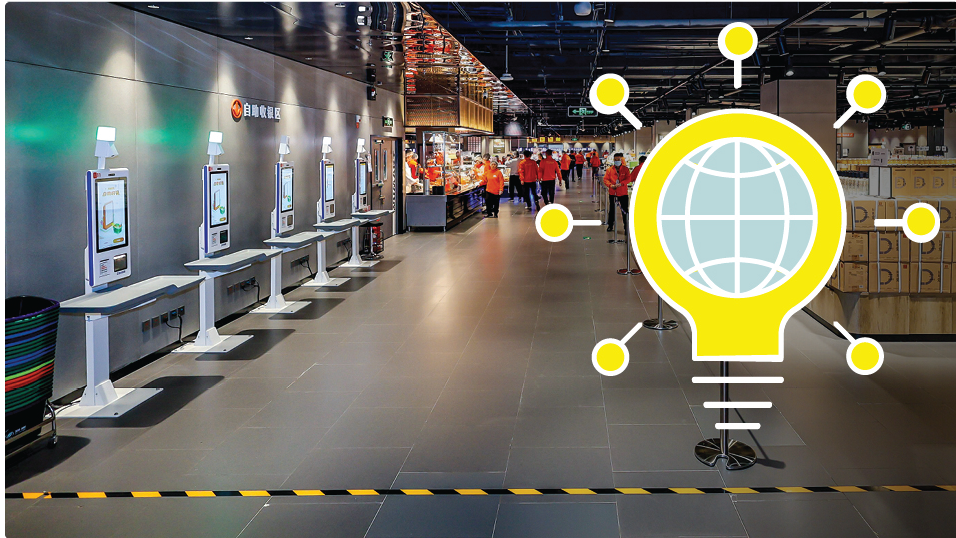
Twenty-one retailers put their hats in the ring for the inaugural Smartest Store in the World competition. They represent a who’s who of retail leaders from North America, Europe and Asia, ranging from large operations to tech-forward independents with a handful of stores.
The winner, announced at NACS Convenience Summit Europe in Warsaw in June, was Wumart’s Xueqing Road store, located in Beijing, China.
These are a few ideas that stood out from Wumart and the other winners in this competition.
1. Effective AI relies on good data.
For Gray Taylor, who is a senior advisor to NACS and was one of the judges, what stood out was how the Wumart location flips expectations around AI. “Everybody uses AI to go out to the people with messaging. But often you don't have enough data points, you don't have enough participation.”
Wumart is focused on in-store operations and customer behavior in the store. “It’s basically collecting every bit of data that it can and feeding it into AI in real time. Then real-time decisioning comes out of it.”
2. Implement technology holistically.
Troy Du is the global branding and marketing lead for Dmall, Wumart’s technology partner in the project. “We don't just see AI as a tool to replace one specific function,” said Du.
When Wumart first piloted its AI project, it continued to think of merchandising as these separate functions. While efficiency improved, “it basically was not as good as we expected,” Du said. “Now Wumart is using a merchandising agent to control that whole part of the business. … We changed the entire workflow around AI.”
Du emphasized that this includes every job function and how employees are trained. AI isn’t bolted on to the way things have always been done. It’s the core of the store.
3. Connected systems support both workers and customers.
Second place winner FairPrice, located in Singapore, stood out because of its connected ecosystem. “It’s not just one thing. It’s an integrated intelligence system,” said Gray.
The Grocer Genie “superapp” consolidates task management, communication and store operations for frontline workers. Operationally, AI vision, AI agents and digital shelf labels combine to create more efficient real-time operations.
Customers benefit from AI-powered shopping assistants and smart carts, which can identify customers and process items in real time. Customers using the smart carts have baskets three times larger than customers who use traditional checkout.
4. Streamline promotions with dynamic pricing and digital shelf labels.
One way Wumart uses AI to transform operations is through dynamic clearance pricing. The system recognizes the need for clearance pricing, determines the optimal discount, and pushes the new pricing to digital shelf labels (DSLs). The human role can be simplified to one-click approval.
The key role that digital shelf labels can play in the store of the future also stood out to George Zheng, NACS International’s Asia-Pacific director. Removing the manual labor that comes with changing prices is huge. “Now, a button in the back office can change the price,” said Zheng. Add in agentic models that can manage price changes on behalf of the retailer, and DSLs may start to feel like core tech.
Third-place winner Kavanagh’s in London, England, combines Bluetooth shelf rails, AI vision and an analytics engine to monitor pricing, availability and shelf execution. Pricing updates are executed instantly, competitor pricing is tracked daily and shelves are continuously monitored. The results? Waste cut by more than 50%, 100% pricing compliance, and 98% on-shelf availability.
Read more about Wumart and the Smartest Store in the World competition in the August 2026 issue of NACS Magazine.
Artificial Intelligence
