The Changing Landscape of Lager Sales
Emerging brands and changing consumer tastes shift the leaderboard atop this critical beer category.
Oct 09, 2026 | 6 min read
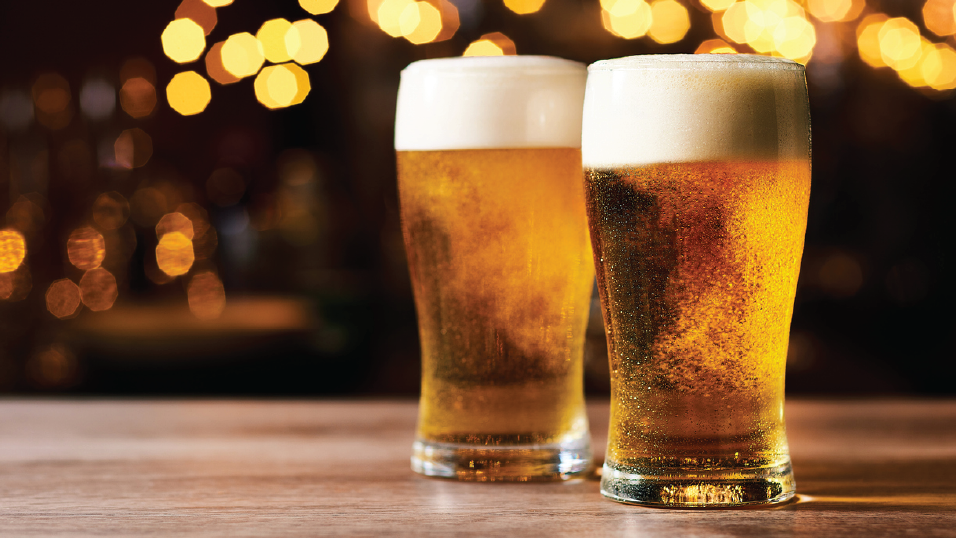
Ask a person, anywhere on earth to describe “beer,” and you’re likely to get a remarkably similar answer: Beer is light, bubbly, pale in color and relatively low in alcohol. For almost the entire world, pale lager is beer, no matter the brand. Of course this is also true in the United States, where lagers make up 77% of off-premise beer volumes, according to NIQ data. Essentially half of that volume, 34%, is in light lager, with full-strength American lager close behind. No one knows better than convenience store operators how critical these beers are to the bottom line—for retailers, distributors and suppliers alike.
This massive chunk of the country’s alcohol business has for decades been dominated by the same large domestic and international players. It’s one of the most entrenched categories across beverage alcohol. But the mainstream lager landscape today is far from static.
Since the Covid pandemic, this category has seen major shifts at the top and bottom alike. Bud Light ceded its crown as the top-selling packaged beer in America; Mexican imports caught fire and then cooled; Michelob Ultra became Anheuser-Busch InBev’s shining star; and emerging brands from new producers proved that they can offer something fresh, at scale. Together, these developments have shifted billions of dollars in sales.
The untrained eye might think the mainstream lager section of the beer cooler is the same as it’s ever been, but in fact, it’s undergoing significant changes with huge implications for the entire beer category.
They’re a response to shifting consumer demographics, current economic conditions and a slate of new suppliers who see the opportunity to grab share from established titans. Even flavor is driving gains in a category that, historically, hasn’t innovated much in that space. All this choice is energizing for consumers—and requires operators to return to the beer cooler with fresh eyes.
“We’re seeing relatively new brands playing with different levers—flavors, attributes, price—for the chance to not just convert existing consumers, but get new people into more traditional beer through trial,” said Dave Williams, president of Bump Williams Consulting, a beverage-alcohol analytics and consulting firm. “Lagers remain a massive foundation to the beer category.”
The title of America’s best-selling beer has been a bit of a jump ball over the past half decade.
Just three years ago, Bud Light was still America’s top-selling beer by dollar sales, a title it had enjoyed for more than two decades. But in mid-2023, Mexican import Modelo Especial made headlines by dethroning this long-standing king. It marked a changing of the guard not just at a brand level, but a supplier level. Modelo was just one beer in a strong portfolio of Mexican imports sold in the U.S. by Constellation Brands, a portfolio that also includes Corona, Victoria and Pacifico. (Elsewhere in the world, Grupo Modelo is owned by Anheuser-Busch InBev, but the U.S. Justice Department forced ABI to divest of those brands in 2013.) For years, Modelo had been building significant momentum, which finally reached an apex as Bud Light’s sales footing faltered.
Just two years later, the tides had turned again: Michelob Ultra, brewed by ABI, overtook Modelo for the top sales spot, where it remains today.
Ultra first debuted nearly 25 years ago, in 2002, and it’s made a slow and steady rise to the top since then. At just 95 calories and 2.6 grams of carbs, it’s often understood as an example of shoppers’ desire for premium and “better-for-you” options in the beer cooler. But that’s only part of the story. (Miller Lite contains just one more calorie than Michelob Ultra, a fact that Miller’s parent company, Molson Coors, has highlighted in advertisements.) Rather, Michelob Ultra has successfully become a lifestyle brand, spinning off hard seltzer and non-alcoholic versions that convey a premium, active vibe.
Williams notes that while Ultra dominates the super-premium lager tier, it’s a beer that’s frequently promoted and discounted, keeping it “aspirational but still affordable.” Year to date through May, Ultra posted +4% increase in sales while overall lagers were down -2.7%.
“It’s not just the [calorie and carb] attributes,” Williams said. “The brand does a great job of bringing image and prestige to whoever’s holding it. It’s perceived as a quality product and people are willing to spend a little more for that.”
Consumers had, for years, also proven will[1]ing to spend more on Mexican imports, with brands including Modelo and Corona quickly overtaking domestic brands atop the leaderboard. The U.S. Latino population doubled between 2000 and 2024, which partially explained the trajectory for Mexican imports; but as Modelo and Corona proved, they have appeal to shoppers of all demographics.
The growth for imports has since reversed, and the subcategory is down -2% in chain retail sales through May. Constellation CEO Bill Newlands has said that Hispanic consumers, who account for half of the company’s beer purchases, are “pressured”—a reference to economic realities as well as immigration actions. Still, pockets of imports show strong growth, particularly Pacifico and Victoria, which both grew dollar sales double digits in the first half of the year.
A final area of growth has come from what some are referring to as “New American” lager brands. These are new to market in the last few years, aren’t owned by the multinational brewing companies, but aren’t positioned as craft. Brands include Tivoli Brewing’s Outlaw Light, Wilding Brands’ Howdy Beer, Gallo’s Montucky Cold Snacks, and the juggernaut of them all, Garage Beer, which is co-owned by Travis and Jason Kelce. Such brands are attempting to compete with domestic brands on price while offering a more compelling brand story. Many are succeeding: Chain retail sales of Outlaw, Garage Beer, and Montucky Cold Snacks are all up between 20 and 35% through May.
All lager brands argue their product has superior flavor. What the most successful lager brands today all share is a point of a differentiation they can hang their hats on: an elevator pitch, essentially, that distinguishes their brand from the next one in the cold box.
Continue reading “The Landscape of Lager” in the October 2026 issue of NACS Magazine.
