The Store Has Become a Technology Platform
Yesterday's network strategy may be limiting tomorrow's growth.
Oct 01, 2026 | 3 min read
This article is brought to you by Mako Networks. 
For years, convenience retailers evaluated networks the same way they evaluated utility infrastructure: Did it work? Was it reliable? Could it connect the store?
That approach made sense when the primary purpose of the network was supporting point-of-sale systems and payment terminals.
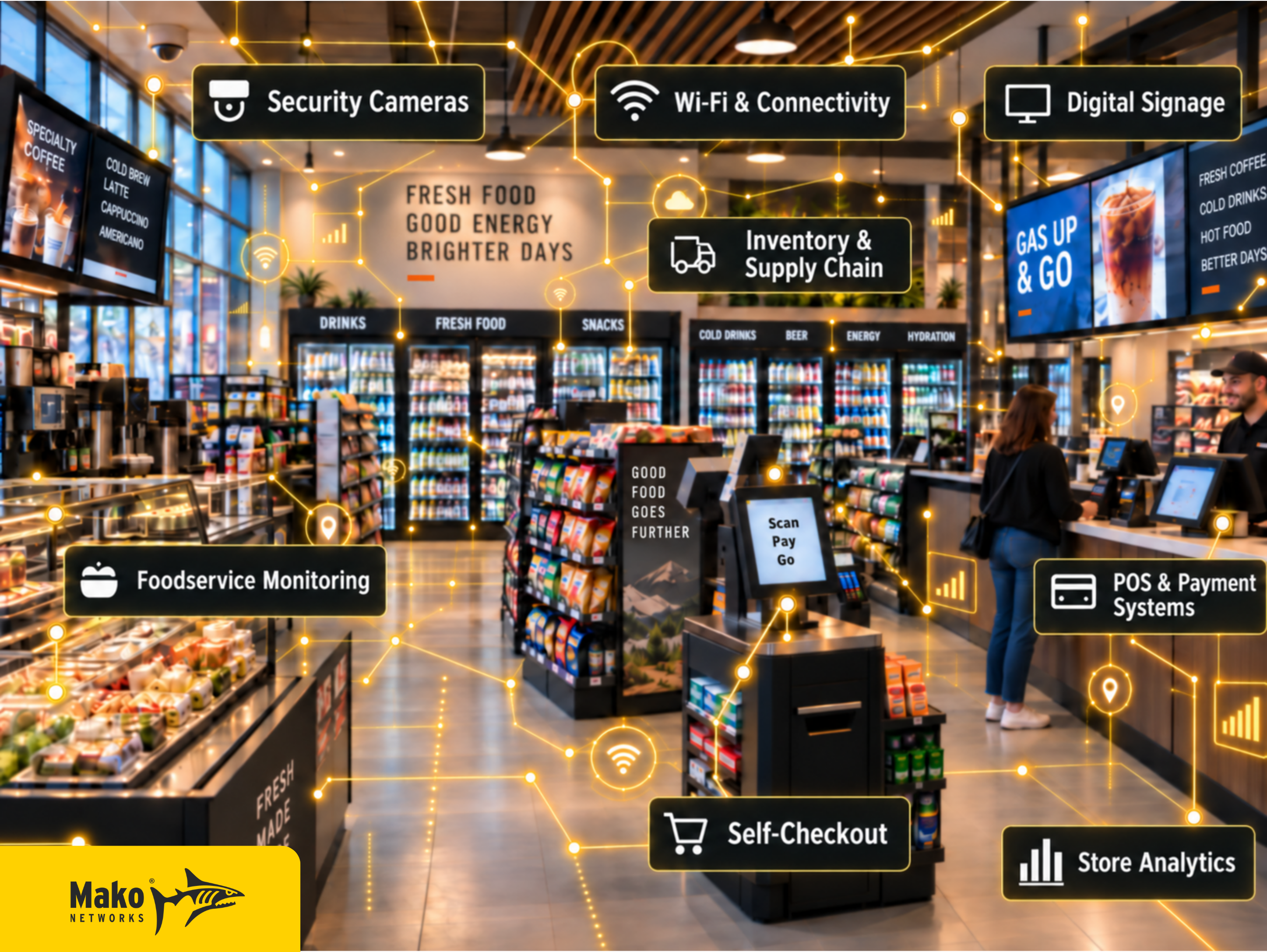
Today, however, the modern convenience store is becoming a highly connected technology environment. Self-checkout, digital signage, video analytics, foodservice monitoring, loyalty programs, security systems and emerging AI applications all depend on one common foundation: the network.
"Retailers don't have a connectivity problem. They have an infrastructure problem," said Jon Kelly, chief revenue officer at Mako Networks. "Many stores are trying to support next-generation technology on infrastructure that was designed for a different era."
As retailers introduce new applications, they often discover that the network itself has become the bottleneck to innovation. The challenge is no longer simply connecting devices. It's securely supporting thousands of devices, applications and data streams across hundreds or even thousands of locations.
According to Kelly, leading retailers are shifting away from viewing the network as a collection of hardware components and toward viewing it as a business platform.
"The network is no longer just plumbing," he said. "It's becoming the operating system of the modern store."
That shift is changing how retailers evaluate technology partners. Security, connectivity, application support and centralized management increasingly need to work together as part of a unified architecture.
Cybersecurity is a prime example. Retailers face growing threats from ransomware, credential theft and increasingly sophisticated attacks. Kelly says security can no longer be bolted onto the network through separate appliances and software products.
"Security has to be embedded into the foundation of the platform itself," he said.
Centralized management is becoming equally important. Rather than managing multiple vendors and disconnected systems, retailers are increasingly looking for a consistent technology foundation that can be deployed, monitored and updated across every location.
Last year, Mako Networks introduced the Mako 6700, a platform designed to provide the flexibility, security and performance required for the next generation of convenience retail technology.
"The retailers that move fastest over the next decade will be the ones that standardize on a platform capable of evolving with their business," Kelly said. "The real question isn't whether your stores are connected. It's whether your infrastructure is ready to support what's next."
This article is the first in a two-part series from Mako Networks. Look for part two, which explores how retailers can prepare for AI and emerging edge technologies.
Data management Artificial Intelligence
