Building a Profitable Foodservice Program Doesn't Have to Be Complicated
Launching a new program isn’t easy, but with the right tools—and partners—retailers can overcome the challenges and build a profitable revenue stream.
Aug 26, 2026 | 3 min read
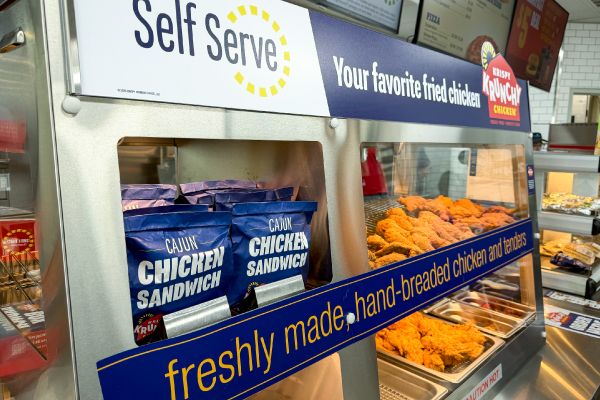
This article is brought to you by Krispy Krunchy Chicken®. 
For convenience retailers, foodservice is a significant opportunity to boost sales and profitability. In 2025, monthly foodservice sales accounted for 28% of in-store sales and generated $36,117 in gross profit per store, according to the NACS State of the Industry Report® of 2025 Data.
Still, some operators hesitate to add foodservice because they already have a lot on their plates. Between juggling tight staffing schedules, operational complexity across the business, space constraints and other day-to-day demands, adding prepared food can feel like one more thing to manage.
Concerns about introducing new processes are understandable, but they don’t have to be barriers to entry, said Dave Yarbrough, key account manager at Krispy Krunchy Chicken.
"With high turnover a reality in our industry, the key is to build a foodservice program that's simple and repeatable while staying true to delivering a premium product and experience that will make your store a destination for prepared food, rather than an afterthought," said Yarbrough.
In a c-store, time is of the essence. “In our business, complexity is the enemy of consistency. If it takes more than a few days to bring your team up to speed, the program has become too complicated,” Yarbrough added.
With that in mind, Krispy Krunchy remains involved well beyond opening day. The team spends a full week conducting on-site training during opening, then follows up regularly to ensure success. “Retrainings, customer appreciation sampling events, marketing and promotional support, financial analysis… Our team is fully engaged and here to do whatever it takes to help our operators continually maximize sales and profits” continued Yarbrough.
In addition to labor, operators must determine whether their location is a good fit for a foodservice program.
While sales metrics such as fuel volume and inside sales are important considerations, Yarbrough said successful programs often depend more on employee culture than on store volume.
“My career working in c-store foodservice has taught me a valuable lesson: Culture beats strategy at every turn,” he said. “Low-to-mid volume stores with staff/leadership who are engaged, accountable, and correctly incentivized will typically outperform high-volume stores that lack a foodservice culture.”
In preparing to launch their foodservice program, Yarbrough said Krispy Krunchy works with operators to tailor menus, product assortments, equipment and program scope to each location and its needs.
“Winning the foodservice battle isn’t always easy for store operators, but it is absolutely attainable, especially if they choose the right partner,” said Yarbrough. Our business model is designed not only to set our operators up for success on the front end but also to ensure they have all the tools, resources, and support needed for long-term success and prosperity.”
This is the first article in a two-part series brought to you by Krispy Krunchy Chicken. Look out for part two tomorrow, which explores the fundamentals of foodservice growth.
