Help Stop Human Trafficking

Important messages that can raise awareness and fight human trafficking.

For many convenience retailers, putting a stop to human trafficking is a serious responsibility. With close ties to the community, stores are positioned to share important messages that employees and customers can use to raise awareness against trafficking and help victims.

“As a convenience store owner, I care about the community and our staff cares about the community. We can spot when something isn’t right, and sometimes that is human trafficking,” said Kent Couch, CEO of the Stop and Go convenience store in Bend, Oregon.

Couch became involved with In Our Backyard, a national nonprofit known for its anti-trafficking work that operates the Convenience Stores Against Trafficking (CSAT) program. “We wanted to make a difference in our community and keep it safe,” he said.

The restroom is often the only safe place where a victim is alone and able to call or text for help. CSAT’s “Freedom Stickers” are designed to be posted in restroom stalls and contain the National Human Trafficking Hotline number, 888-373-7888, or text INFO or HELP to BeFree (233733).

Human trafficking survivor Sara Perkins shares in a joint CSAT and Ready Training Online training video that she frequented convenience stores multiple times a day. “As a victim, I know that if I had gone into any bathroom and saw an In Our Backyard sticker it would’ve been an open door for me to get the help I needed,” she said.

NACS members also access free resources from the U.S. Department of Homeland Security’s Blue Campaign, including the Human Trafficking Awareness Guide for Convenience Retail Employees.

Contact

For more information about efforts to put a stop to human trafficking, contact:
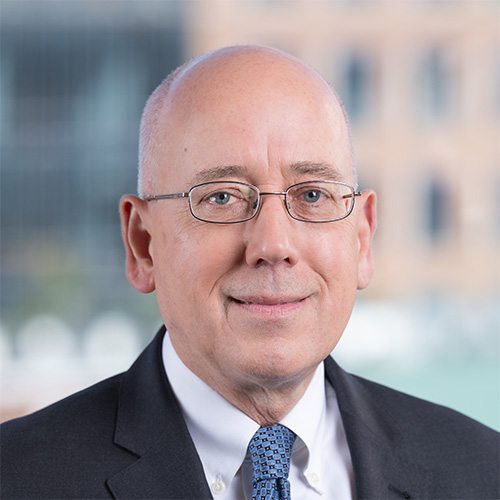
Jeff Lenard

Vice President Media & Strategic Communications

NACS

(703) 518-4272


in

Jeff Lenard oversees industry-wide external communications campaigns to advance the role of convenience stores as positive economic, social and philanthropic contributors to the communities they serve. He also serves as lead spokesperson and has conducted more than 6,000 media interviews about trends and innovations at convenience stores. In addition, he is the creator and co-host of the association’s award-winning weekly podcast, Convenience Matters.

Prior to joining NACS in 1999, Lenard served in communications and marketing functions for several energy-focused associations. He earned a B.S. in mechanical engineering from Worcester Polytechnic Institute and an M.B.A. in marketing from Syracuse University.

Education on what human trafficking is and how to recognize it can help save a victim.

There are two types of human trafficking: 

  • Sex Trafficking: Commercial sex act induced by force, fraud or coercion, or in which person performing the act is under age 18
  • Labor Trafficking: Using force, fraud or coercion to recruit, harbor, transport, obtain or employ a person for labor or services in involuntary servitude, peonage, debt bondage or slavery

Education on what human trafficking is and how to recognize it can help save a victim. CSAT lists these red flags that people could be victims of trafficking:

  • Not free to leave or come and go
  • Avoid eye contact and show signs of physical abuse or restraint, confinement or torture
  • Are unable to clearly explain where they live
  • Are fearful, anxious, depressed, submissive or paranoid

Anyone who suspects human trafficking should call local authorities or the toll-free 24-hour hotline for the National Human Trafficking Resource Center: 888-3737-888, or text BeFree (233733). They can also leave a tip on the Hotline's website.

Truck stops can also be prime targets for traffickers due to their remote locations and transient customer base. Anti-trafficking groups like Truckers Against Trafficking can help the industry fight human trafficking within the transportation industry. 

The National Center for Missing and Exploited Children (NCMEC) suggests that traffickers and buyers often target youth who lack strong support networks, have experienced violence in the past, are experiencing homelessness or are marginalized by society.

In 2020 NCMEC received more than 17,000 reports of possible child sex trafficking. Although children who run away frequently or for long periods of time tend to be fleeing an unsafe situation, data suggests that 1 in 6 runaway children become victims of child sex trafficking.

NCMEC, which serves as the national clearinghouse and resource center for information about missing and exploited children, backs the Code Adam program, created in memory of 6-year-old Adam Walsh, who was abducted from a Florida department store and murdered.

Employee training and store signage is available to convenience retailers to help identify and save missing children. NACS partnered with organizations that provide education and resources so stores can serve as a safe place and store associates can recognize the signs of abuse, neglect or abduction.

National Safe Place, for example, provides access to immediate help and supportive resources for youth in need. The program designates schools, fire stations, libraries and other youth-friendly organizations including convenience stores as Safe Place locations.

There are more than 20,000 Safe Place locations where youth can access immediate help and safety, including Tulsa, Oklahoma-based QuikTrip. The convenience retailer has been an active supporter of Safe Place since the 1990s and every store serves as a Safe Place location, noted by the Safe Place yellow and black sign. Safe Place provides staff training to help employees recognize the signs of children in immediate danger.

Matthew Stephenson, director of training and development, at Ankeny, Iowa-based Casey’s, knows firsthand the dramatic impact of his company’s involvement in CSAT. “We have seen the direct recoveries of victims. It gives me goosebumps,” he said.

“Remember your purpose as you go through life is bigger than selling gas,” said Stephenson. “This is a cost-effective way to help take care of our communities.”

Many state-based convenience store associations work with their retail members through Convenience Stores Against Trafficking (CSAT) to help store associates recognize the signs of trafficking.

The Georgia Association of Convenience Stores (GACS) partnered with In Our Backyard ahead of Super Bowl LLII in Atlanta.

“Some operators said: ‘We don’t want people to think our store is dangerous.’ But half of people in the U.S. come into a convenience store every day. They need to know what it looks like…what to look for,” said Angela Holland, president of GACS.

GACS signed up 17 companies and nearly 300 stores. The weekend before Super Bowl LLII, about 400 volunteers distributed books with photographs of missing children to convenience store and truck stop employees and placed Freedom Stickers in restrooms. By late May, 29 of the 34 children listed in the book had been recovered, and multiple trafficking victims received assistance.

“My role now is to continue to promote this, to make sure people don’t forget. This is not just one time at the Super Bowl,” Holland said. “There needs to be a constant reminder that ‘hey, this matters. It changes lives.’”

In 2019 GACS earned an ASAE Power of A Summit Award for its work with In Our Backyard.

In April 2019, Midwest convenience retailers Casey’s and Kum & Go came together to combat human trafficking by partnering with CSAT. Combined, the two convenience store chains have nearly 3,000 locations, a combined footprint that represents a multi-state effort to help trafficking victims.

Store associates participated in CSAT training and placed “Freedom Stickers” in restroom stalls so victims could call or text the National Human Trafficking Hotline.

The Wisconsin Petroleum Marketers & Convenience Store Association (WPMCA) is working with the state Department of Justice to help educate convenience retailers in the state about human trafficking.

“Our industry employs over 50,000 people and operates nearly 3,000 convenience stores across the state, and we are constantly interacting with the motoring public,” said WPMCA Chairman Andrew Bowman, who is also the president of Stop-N-Go of Madison.

The Wisconsin DOJ provided training and resources to La Crosse, Wisconsin-based Kwik Trip employees, including decals that were placed on the back of restroom stall doors with information regarding human trafficking. Kwik Trip also distributed a public service announcement that communicates what to do and what not do when a possible victim of human trafficking comes into a store.  

Employees, Customers Spot Trafficking

An employee of a Midwestern convenience store chain was able to help a victim of trafficking who fled to the restroom—a sign that something was not right. “It scares me to think what would have happened if she would not have gotten away,” the employee told a local newspaper.

The quick action of a gas station clerk in Robertsdale, Alabama, helped save a victim of human trafficking who came inside the store distraught. “I could tell something was wrong, something happened. She was shaking and crying" the clerk told a local news station. The victim asked her to call the police and shortly after the trafficker was arrested.

Customers also help victims of trafficking, thanks to information widely available on how to spot the signs. When a truck driver noticed an RV parked at a local gas station with black drapes covering the windows and a young girl looking out, he felt that something wasn’t right. He called 911 and alerted authorities, which led to the arrest of two traffickers.

More than 152,000 U.S. convenience stores conduct 160 million transactions a day in every community, and most of these businesses are open 24/7. Longer hours of operation, public restrooms and ease of access increase the likelihood that convenience stores can help those in peril, such as victims of human trafficking or youth in need. 

Consumers Want Retailers to Combat Human Trafficking

NACS surveys found that customers will support convenience stores their community that address societal issues like stopping human trafficking and protecting children: 

  • 92% of potential employees say they are more favorable (61% say they are “very favorable”) to the convenience store industry when they learn that convenience stores play a role in combatting human trafficking. This message was the top-rated of 20 positive industry messages shared with consumers. (January 2019 NACS consumer survey) 
  • 70% of consumers say that they believe that convenience stores play a role in combatting human trafficking. (January 2019 NACS consumer survey) 
  • 40% of consumers say that human trafficking is an issue they want their local convenience store to be engaged in addressing (September 2018 NACS consumer survey) 

Anti-Human Trafficking Groups

National Safe Place is a fee-based community outreach program. A certified “Safe Place” is identified by the bright yellow and black diamond-shaped signs or decals. Learn more about joining Safe Place Network.
The Convenience Stores Against Trafficking (CSAT) program provides convenience industry-specific materials and education on how to recognize and report human trafficking. CSAT offers free Freedom Stickers, upon request, and in-person training courses. 

The U.S. Department of Homeland Security (DHS) Blue Campaign provides free campaign materials, training and videos to help employees recognize the signs of human trafficking. 

NACS serves the global convenience and fuel retailing industry by providing industry knowledge, connections and issues leadership to ensure the competitive viability of its members’ businesses.


© NACS ALL RIGHTS RESERVED

Terms of Use | Privacy Policy