Reduce Back Office Blind Spots Through Smarter Data Analysis
A clearer picture can help you improve sales and cut costs.
May 27, 2026
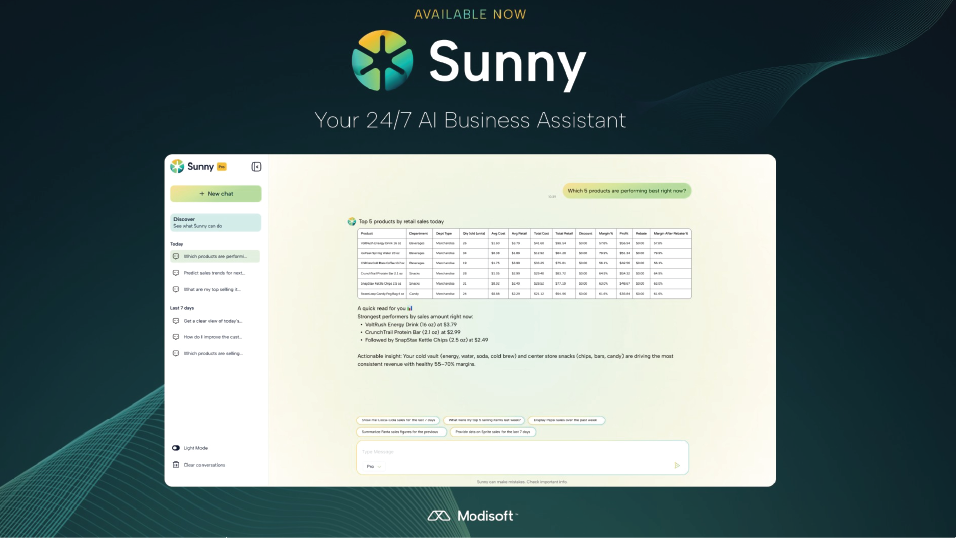
This article is brought to you by Modisoft.
For independent convenience operators, running the back office can be just as challenging as running the store itself. Inventory, labor, purchasing and more all compete for attention—a dilemma that could leave some operators in reaction mode instead of planning for growth. Key parts of running their business, in other words, remain in their blind spot.
“Retailers may be collecting a lot of data about their stores without connecting the dots to generate growth plans for the business,” said Safi Modi, head of growth at Modisoft. “They’re managing the day‑to‑day. They’re not looking at things holistically.”
Labor is one of the biggest challenges that retailers face. While employee turnover declined in 2025 according to preliminary data from the NACS State of the Industry Report® of 2025 Data, the cost of hiring and training workers is high. According to the 2025 NACS Talent Insights Dashboard, it costs $1,096 to hire a full-time sales associate and $1,902 to hire a store manager. Overall, wages and benefits account for 30.9% of gross profit dollars, making it a critical part of the convenience business.
Instead of looking at shift schedules and predicting busy dayparts, a business can go a step further by using transaction count data to determine when its stores get the most traffic. “A retailer can correlate that information to not just how many staff members they have, but if they have enough staff on site to make sure items are getting stocked, the store is staying clean or the register is manned,” said Modi. “It’s all about seeing things more clearly.”
Another challenge retailers navigate is the definition of a blind spot—shrink and theft. In 2025, merchandise shrink was $1,703 per store, per month, and while it has slowed down from the previous year, it is still two times higher than in 2021, according to preliminary NACS State of the Industry Data.
Modisoft’s reporting tools offer the ability to track inventory and sales data and flag instances of potential theft, such as mismatched price amounts, a high number of manual voids or discrepancies in transaction amounts. “If you’re short a few dollars, maybe it’s a clerical issue,” Modi said. “But if it’s in the thousands, then there could be some sort of theft going on in your stores. One of the most important features is that we can pull the sales data and match it with the back-office data so retailers can really see what’s going on.”
“If you’re leveraging your data, you’re moving from blind spots to full vision,” said Modi. “That is what really allows retailers to scale either their sales and profits or expand their business with new locations. It allows them to better understand the convenience and fuel business as a whole and benchmark against competitors in the market, leading to more growth.”
This is the second in the two-part article series from Modisoft. Part one explored how independent c-store operators can turn data into growth.
Back office Data management