Food Truck Businesses Blossomed During Pandemic
Independent operators adopted new technologies and techniques.
Jun 01, 2021 | 4 min read
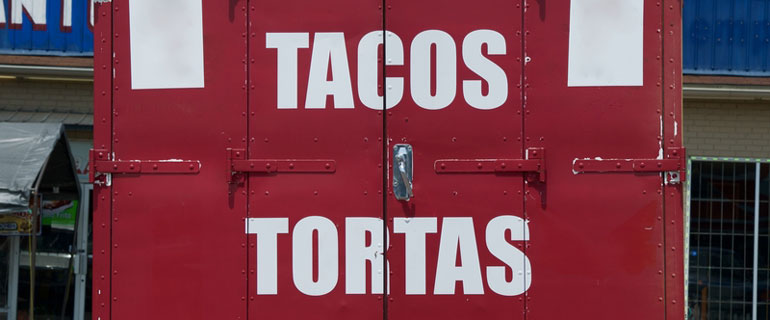
ALEXANDRIA, Va.—For some California business operators, the pandemic gave them the needed push to bring their businesses into the 21st century, reports the New York Times.
One of those people is Ana Jimenez, owner of Tacos El Jerry, a fleet of four food trucks in Santa Cruz County. Last year, Jimenez’s four trucks began taking orders through an app and a website, delivering directly to customers, and cultivating a customer base through a new social media presence. All of that added up to a big boost in sales and the addition of a new food truck. She credits the success to her 23-year-old son, Jerry.
When the pandemic started, “we didn’t have anything on social media. He said, ‘we’re going digital on all of this, Mom,’” Jimenez said. Now half of her orders are now placed online.
Next, Jerry created Facebook and Instagram pages for the trucks and a social media advertising campaign, and the trucks began accepting credit card purchases. “Each truck is now serving around 300 people per day, which translates to roughly $5,000 in sales daily,” Jimenez told the New York Times.
“While the pandemic has certainly hurt the majority of small businesses, it has also pushed many to be more innovative by looking for new revenue streams and ways to reach customers,” said Kimberly A. Eddleston, a professor of entrepreneurship and innovation at Northeastern University.
Like Jimenez, some businesses have “focused on ways to maintain their customer base by, for example, delivering products directly to customers,” Eddleston said. “While others have created products and services that attract new customers.”
In Pittsburgh, Luke Cypher expanded the already eclectic selections at his Blue Sparrow food trucks, adding pizza, four-packs of local beer, gift cards and five-ounce bottles of house-made hot sauce. During the pandemic, Cypher’s business took a hit when 24 festivals and more than a dozen scheduled weddings were canceled.
He temporarily shut down a second food truck and introduced a website to interact with his customers and an online ordering system for his smaller truck, which he usually parked at a neighborhood brewery.
“I switched the menu to focus on soups, noodles, burritos and pressed sandwiches, so that the things that we were handing our customers would make it home and still be a good experience after they opened up the bag and took it out,” Cypher told the Times.
“I was able to stay afloat because, unlike a restaurant with traditional seating, it was just myself, my sous-chef and his wife, who worked part-time,” he said. “We ended up serving roughly a hundred people a day, four or five days a week. It wasn’t the numbers that we did before, but our lights were able to stay on because we had reduced a lot of costs that we had involved in running multiple rigs.”
Social media became a huge part of his marketing platform. “The pictures that we take and post on Instagram and Facebook let people feel like they’re a part of our truck family,” Cypher said.
For more information on food trucks and how they are driving foodservice sales, check out the feature story “Four-Wheeling” in the September 2019 issue of NACS Magazine. And listen to Convenience Matters episode No. 11, “The Ultimate Good to Go,” for a lively conversation about food trucks.
Not a NACS Magazine or NACS Daily subscriber? Subscribe to NACS Magazine in a print and/or digital format to read the latest insights from industry thought leaders each month. Subscribe to NACS Daily to receive a roundup of industry news and trends in your inbox each weekday. Subscriptions to NACS Magazine and NACS Daily are complimentary for readers in the convenience retailing industry—you just need to sign up!
Format
