Job Growth Was Overstated in 2025, but 2026 Has Strong Start
2025 had the biggest benchmark revision since 2009 in percentage terms, but January shows promise for 2026.
Feb 20, 2026 | 2 min read
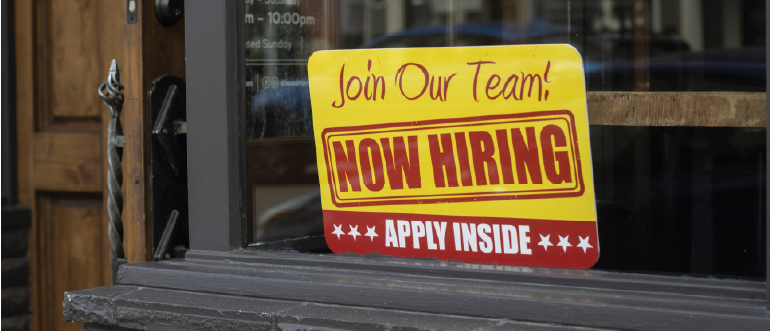
The Bureau of Labor Statistics released data this week that shows U.S. employers added just 181,000 jobs last year—69% fewer jobs than the initial estimate of 584,000, the New Yok Times reported.
“In total, the U.S. economy has more than a million fewer jobs than previously reported,” the NYT wrote.
The revisions are part of an annual process where the BLS reconciles its monthly job growth estimates with data from the state governments. While the benchmark revisions are typically small, 2024 had the biggest revisions in years—and 2025’s was even bigger, “the largest since 2009 in percentage terms.”
Jed Kolko, an economist who previously oversaw economic data at the Commerce Department, told the NYT that “revisions tend to be bigger when the economy is changing rapidly.”
At the same time, BLS released its January job estimates, announcing that a surprisingly strong 130,000 jobs were added last month, much higher than the 75,000 economists had expected.
According to the Associated Press, “healthcare accounted for nearly 82,000, or more than 60%, of last month’s new jobs. Factories added 5,000, snapping a streak of 13 straight months of job losses. The federal government shed 34,000 jobs.”
The unemployment rate also fell from 4.4% in December to 4.3% in January.
“The January report offered a variety of reasons for optimism. Job gains picked up in a few industries that languished last year. The unemployment rate fell sharply for Black workers and teenagers, both demographic groups seen as bellwethers for the broader economy,” the Washington Post reported.
“Today’s report is a tale of two time periods. 2025 and 2024 were much slower than originally reported,” said Daniel Zhao, chief economist at careers site Glassdoor. “But there is optimism heading into 2026 as we’ve seen some improvements with the latest data.”
Join industry peers at the NACS State of the Industry Summit April 14-16 in Schaumburg, Illinois, to learn more about economic narratives that are shaping 2026, and gain access to the newest metrics—as well as industry trends, opportunities and watchouts—in key topic areas such as finance, labor, store operations, foodservice, merchandising and fuels.
