How Can Retailers Rethink the Cold Case?
Strategic merchandising helps customers shop faster, drives impulse purchases and builds bigger baskets.
Jun 09, 2026 | 2 min read
This article is brought to you by Structural Concepts.
For another consecutive year, foodservice led convenience inside sales in 2025. Foodservice accounted for 28.5% of the total sales mix—up from 11.9% in 2005—and 38.9% of in-store gross profit dollars. Across the industry, a pattern continues to become clear: Foodservice is a growth and profit opportunity for operators.
“C-stores are in a perfect spot right now to capture market share of foodservice customers,” said Danielle McMiller, vice president of marketing at Structural Concepts, a manufacturer of temperature-controlled display cases. “They are positioned to meet the new better-for-you health trends and changes in consumer eating habits due to GLP-1s, and are keeping their stronghold on packaged beverages.”
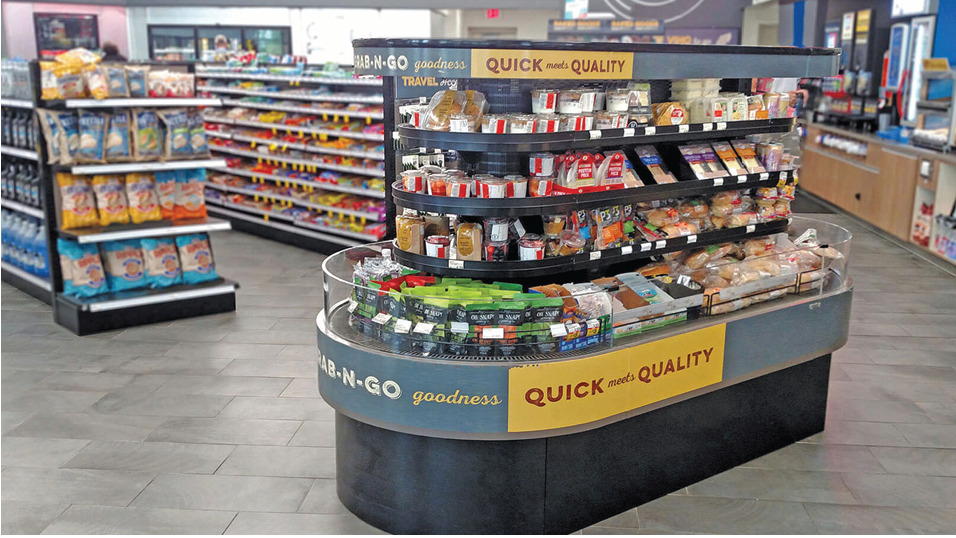
Merchandising food items and products effectively can drive sales and increase basket sizes. “Merchandising strategy is what allows consumers to really engage and interact with your offerings, and operators can optimize sales versus limiting themselves to what types of products they can put in a cooler—which can create cross-selling opportunities,” said Patrick Rooney, director of marketing at Structural Concepts.
According to a study conducted by Structural Concepts and data consulting company Kantar, customers are 50% more likely to buy items from an open cooler versus a closed-door cooler. They can find the products that they’re looking for more easily—the study found that customers spend 10% less time (or around 15 seconds) in front of the open cooler versus a cooler with a door, even when the items in each are the same. Participants in the study also spent $1.23 more (11%) when shopping from an open cooler.
In an aisle with both cooler options, 63% of participants gravitated to the open cooler first. “It makes a difference that there are no barriers between the consumer and the products,” said McMiller. As a reason for choosing it first over a doored cooler, participants said the open cooler was easy to shop and provided easy access to products. Without doors as a barrier, customers were more impulsive, selected items faster and put more items in their basket.
Continue reading “Rethinking the Cold Case” in the June 2026 issue of NACS Magazine.
