Future-Proof Stores Rely on Smarter Networks
As device counts soar, operators need connections to be flexible, reliable and secure.
Jul 16, 2026 | 4 min read
This article is brought to you by Mako Networks.
Many modern convenience stores do more than sell snacks and fuel—they function as digital hubs. Retail media networks stream content and POS systems connect to the cloud, while pumps and EV charging stations require real-time connectivity for payments and monitoring. Security systems, Wi-Fi networks and more add to the technological load. If any of these systems fail, the result is lost revenue or compromised data security.
“Retail technology is evolving,” said Jon Kelly, chief revenue officer at Mako Networks. “It’s shifting from traditional network hardware to secure, cloud-managed edge computing.”
Along with that evolution, device counts are soaring. Ten years ago, the average store had only a few devices connected to the internet, according to Mako; today, there are likely dozens. “The retail technology footprint is increasingly complex and demanding,” said Kelly. “A strong retail network will be able to handle all those devices—and however many more there may be 10 years from now.”
Cary Oil, a petroleum supplier based in North Carolina, distributes nearly 1 billion gallons of fuel per year and supports over 900 branded locations across the United States.
Cary Oil was looking for a network provider that could enhance operational efficiency while eliminating the pain points of unreliable equipment and poor customer support. It has deployed Mako Networks at nearly 300 sites with plans for continued growth. “We have no complaints from the almost 300 sites currently on Mako with Cary Oil—given the complexity of our industry and operations, that is impressive,” said Dana Dennis, Cary Oil’s lead brand administrator.
This focus on building a unified, secure and reliable network infrastructure is also shared by another Mako customer, OXXO. Operating more than 240 sites across Texas, New Mexico and Arkansas, OXXO partnered with Mako to simplify operations, improve visibility and deliver a more reliable network by future-proofing their technology stack.
With Mako's cloud-managed platform, OXXO’s support teams can quickly identify whether issues stem from connectivity, device communication, or external service providers—allowing problems to be resolved faster and with greater confidence. This resulted in a 90% reduction in downtime across 240 locations while protecting millions in fuel and in-store transactions annually.
“Before Mako, we spent too much time troubleshooting intermittent issues with limited visibility into the root cause,” said Kristopher James at OXXO USA. “Today we can identify problems faster, support stores more efficiently, and keep transactions moving.”
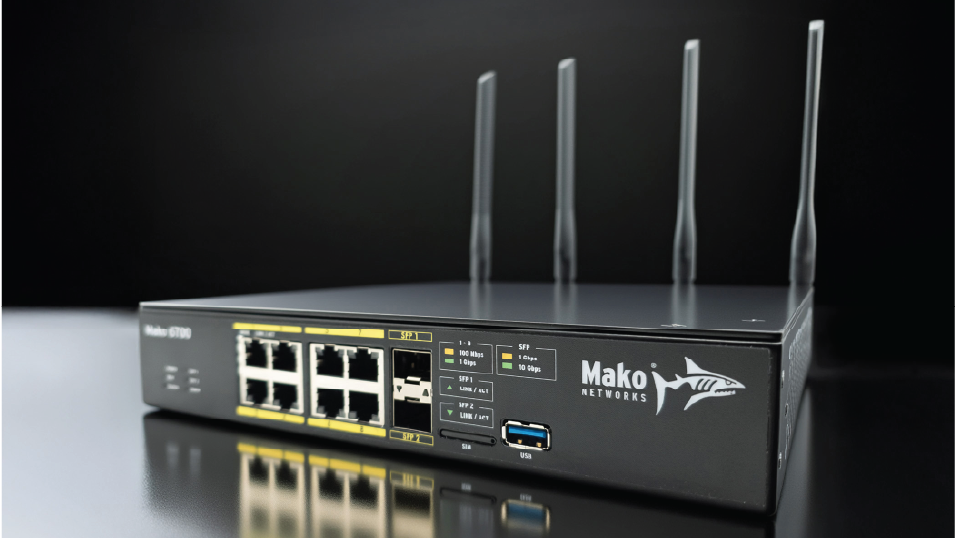
Edge computing and AI are essential building blocks for any retailer that wants to future-proof its business, according to Mako Networks. In 2025, the company introduced the Mako 6700, a network device that gives users more flexibility and security. Simon Gamble, co-founder and president of Mako Networks, calls the device “a future-ready platform built to simplify operations, safeguard data and adapt to evolving business needs.”
According to the company, the device allows retailers to adopt new payment methods, scale retail media networks, add EV charging and roll out AI‑enhanced experiences without sacrificing security or resilience.
The increasing number of AI-enabled tools, for applications from loss prevention to scheduling to inventory management and beyond, come with large amounts of data to store and make sense of. “We’re exploring how retailers can deploy AI to make sense of large swaths of information securely and reliably,” said Kelly. “There’s so much information that you capture as a network—how do you make sense of it and turn it into something that’s actionable at the site level?”
“The opportunities are endless,” said Kelly, “but only if your infrastructure is up to the task.”
This is the second in the two-part article series from Mako Networks. Part one, which looked at the benefits of modernizing tech stacks, published yesterday.
