What’s Shaping Transportation Energy Policy?
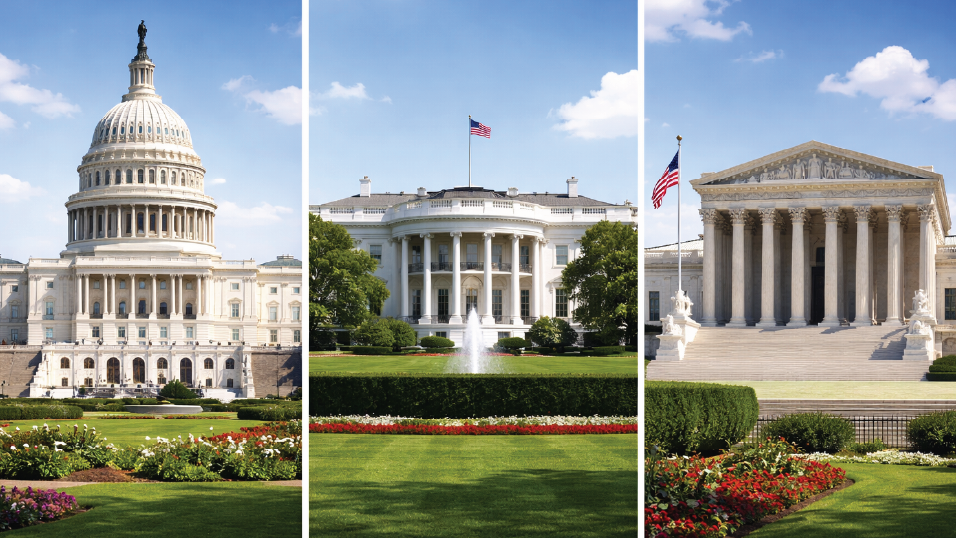
As markets continue to evolve, the future of fuel is being shaped by all three branches of the federal government and at the state level.
Apr 20, 2026 | 5 min read
By Matt Durand, Deputy General Counsel at NACS
If it feels like transportation energy policy is coming from every direction at once, that’s because it is. The rules that affect the types of vehicles that consumers buy—and the vehicles retailers can profitably sell—are being set and reset through overlapping layers of congressional action, federal agency rulemakings and court challenges.
NACS is advocating for durable and technology-neutral policy choices that reflect market realities and protect consumer choice—and that can be a challenge amid partisan gridlock among members of the House and Senate. The most consequential choices are often made through fiscal policy, where procedural maneuvers or political pressures can help push large legislative packages over the finish line.
We saw this recently with a $500 million cut to the National Electric Vehicle Infrastructure (NEVI) program, which was attached to a must-pass government funding bill, and with the many changes to alternative fuel tax credits included in the One Big Beautiful Bill.
Outside of these large omnibus-type bills, passing standalone legislation is difficult with a closely divided Congress, even with bipartisan support. One exception was at the beginning of the current Trump administration, when Republicans and Democrats agreed to block states like California from enacting EV mandates—but this was only possible using a special process that prevented a Senate filibuster.
More often, policy is determined by what Congress does not do, such as repeated unsuccessful attempts to pass year-round E15 legislation despite broad stakeholder support.
Executive Branch Regulation
The White House and federal agencies wield significant power through the regulatory process.
Recent regulatory actions underscore how quickly the ground can shift. For example, the Environmental Protection Agency (EPA) recently repealed tailpipe emissions standards for greenhouse gases, and the Department of Transportation (DOT) proposed to recalibrate fuel economy standards for cars and trucks. Both standards were so strict that they would have functioned like a federal EV mandate. These actions mark a major policy shift with real implications for the transportation energy market.
Other less publicized actions have an impact as well, even if they sometimes send mixed signals. After temporarily freezing and then resuming NEVI funding, DOT revised its implementation guidance to favor sites with extended-hour operations and amenities like c-stores, while also proposing strict made-in-America requirements that may be impractical for the current supply chain. EPA has proposed aggressive new targets under the Renewable Fuel Standards (RFS), but has also granted exemptions to refiners in a manner that could create inefficiency and instability in the market.
Litigation After Regulation
When agencies regulate, litigation typically follows. From the uncertainty of a new lawsuit to the details of the court’s final judgment, these cases can have major implications for the convenience industry.
Two recent Supreme Court decisions—Loper Bright and Corner Post—sent shockwaves across the regulatory landscape, upending decades of administrative law precedents and making it easier for regulated businesses to challenge burdensome regulations. A series of other cases, most prominently West Virginia v. EPA, have shifted the balance of power by requiring clear congressional authorization before agencies can regulate issues of substantial economic or political significance.
Other important cases are awaiting a decision. NACS is involved in multiple pending lawsuits concerning EV mandates, for example, and there are likely to be challenges to the EPA and DOT actions on tailpipe emissions and fuel economy. Decisions under the RFS are frequently litigated as well, and the Supreme Court recently struck down the Trump administration’s global tariffs.
State and Local Regulation
Of course, the story of transportation energy policy does not end in Washington. Across the United States and the political spectrum, state and local governments are using the tools at their disposal to influence federal policy and to fill in the gaps.
Some states are attempting to backfill the loss of federal money for EV programs, with California alone proposing more than $250 million for infrastructure funding and consumer rebates. Others are acting through their public utility commissions to address issues like electricity demand charges or leveraging state contracts to incentivize private investment on public properties.
For liquid fuels, seven Midwestern states have opted out of the federal standards for summertime gasoline—creating a regional boutique fuel specification that is both more expensive and less fungible—in an attempt to incentivize E15 without the need for congressional approval. California, too, is in the process of amending its unique fuel specifications to allow for E15.
At the local level, cities and towns sometimes use zoning and other ordinances to control where and when fuel can be sold. Local officials also have influence over which codes are adopted and how they are enforced. These codes can affect everything from site design to daily operations, with some jurisdictions requiring minimum staffing levels to monitor gas dispensers and others proposing to limit the proximity of EV charging equipment.
Transportation energy policy is rarely a single conversation about one fuel or one technology. Today, it involves a complex ecosystem of tax incentives, fleet rules, infrastructure requirements, litigation risk, utility regulation and safety standards—all interacting in real time across all levels of government.
